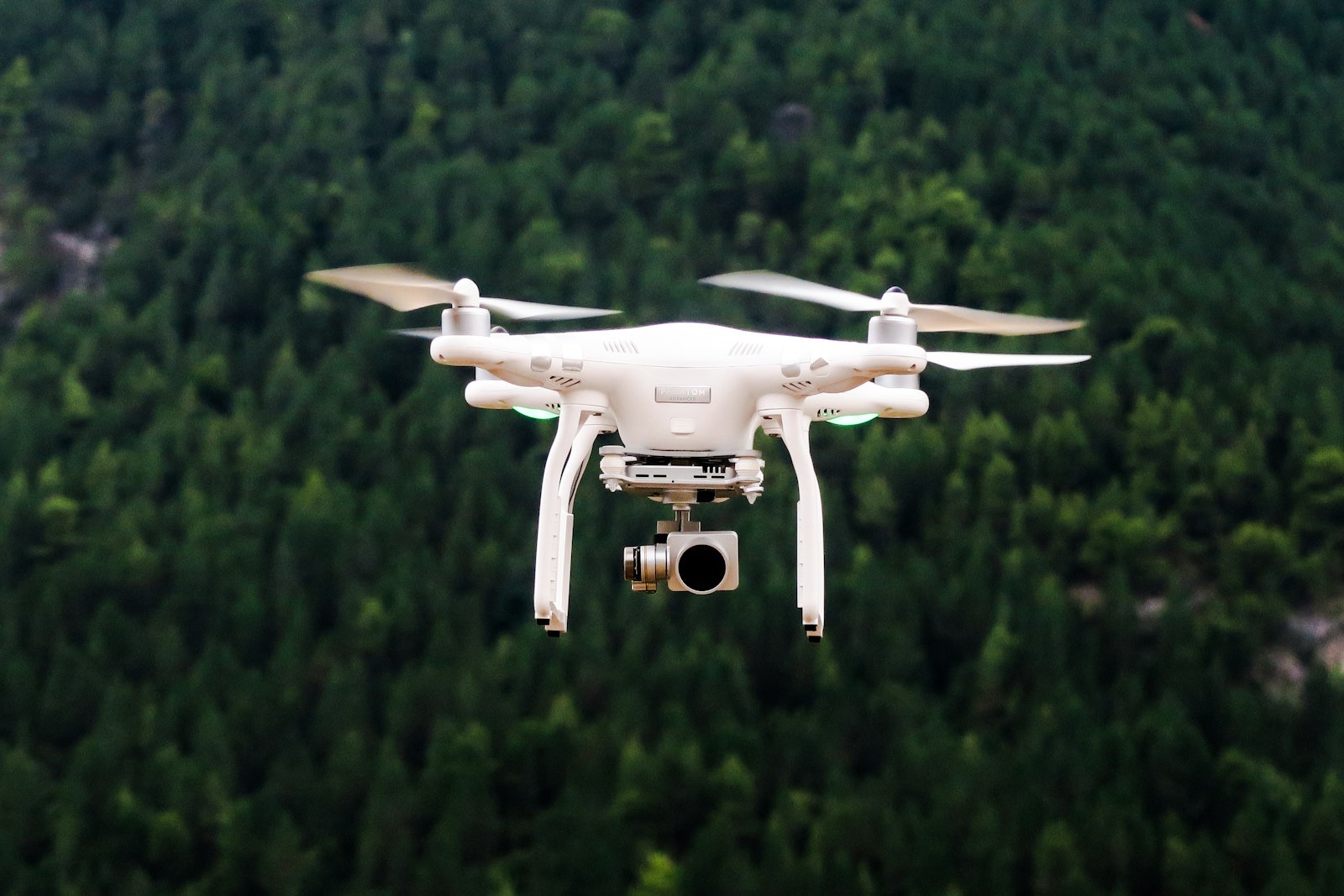
For inspecting a roof or high facade, a drone is usually faster, safer and less disruptive than scaffolding. It flies a camera to the defect and captures high-resolution imagery from close range in a fraction of the time it takes to erect scaffold, hire a MEWP or arrange rope access. Scaffolding still has its place when hands-on access is needed to test, touch or repair, but purely to look at a building, a drone almost always wins.
The key distinction is inspection versus intervention. A drone is superb at seeing a building; it cannot touch it. Traditional access puts a person physically at the defect, which you need for anything hands-on, but at a cost in time, money and risk that is hard to justify when the task is simply to assess condition. Choosing between them starts with being clear about which of those two things you actually need.
How they compare
| Drone inspection | Scaffolding / traditional access | |
|---|---|---|
| Speed | Often same-day, weather permitting | Days to erect, inspect and dismantle |
| Cost driver | Flight time and imagery processing | Hire, erection, dismantling and hire period |
| Safety | No one working at height | Work at height, with its inherent risks |
| Disruption | Minimal; no structure on site | Occupies space, affects access and appearance |
| Hands-on access | None; visual (and thermal) only | Full physical access to test and repair |
| Best for | Condition surveys, defect diagnosis, scoping works | Repairs, close hands-on testing, ongoing works |
Where a drone is the better tool
A drone reaches the parts of a building that are slow, costly and hazardous to inspect any other way: roofs, facades, elevations, gutters, parapets, chimneys and any high-level element where getting a person up there is difficult or dangerous.
- Speed. A drone can capture a roof or elevation in a single visit, weather permitting, where scaffolding takes days to put up and take down around the same inspection.
- Safety. Nobody has to work at height. The pilot stays on the ground, which removes the single largest risk of a high-level inspection at a stroke.
- Cost. For an inspection alone, a drone avoids the cost and hire period of scaffold or a MEWP put up purely to look at the building.
- Evidence. You get clear, referenced imagery of cracked or slipped tiles, failed pointing, blocked gutters, corroded fixings, cladding defects and signs of water ingress, which a surveyor or engineer can assess without leaving the ground.
- Targeting. Inspect first, then access precisely. A drone lets you find the problem, then bring in scaffold or access only where work is actually needed, rather than accessing a whole elevation to locate a defect.
Where a thermal payload is used, thermal imagery can also help indicate heat loss, damp or missing insulation, which no visual inspection from scaffold would reveal.
Where scaffolding still makes sense
A drone does not replace physical access for everything. Scaffolding or another traditional method remains the right choice when the task needs a person and their hands at the defect.
- Repairs and remedial works, where you are not just looking but fixing.
- Hands-on testing, such as physically testing high-level fixings or taking samples, where imagery is not enough. High-level fixings, for example, are checked by anchor pull testing, which requires physical access to the fixing.
- Prolonged works where continuous, repeated access to an elevation is needed over a period.
- Sites and conditions that limit flying, where airspace, surroundings or weather rule out a safe flight.
In many projects the two are complementary rather than competing: the drone does the inspection and scopes the works, and access equipment is then brought in, precisely targeted, only for the parts that need hands-on attention.
The practical limits of drone inspection
Drones are not unconstrained. Commercial and professional flights in the UK are regulated by the Civil Aviation Authority, and flights near buildings, people and property are subject to CAA rules, so each site has to be assessed and planned. Some locations and conditions place limits on what can be flown. Weather matters too: strong wind, heavy rain or poor visibility can prevent a safe flight, so a survey may need rescheduling rather than compromising safety or image quality. Reputable drone inspections are flown by qualified remote pilots operating within CAA rules, with each flight planned to the requirements that apply to the site.
None of this undermines the case for a drone on a straightforward inspection; it simply means the flight is planned properly rather than assumed.
Common questions
Is a drone inspection cheaper than scaffolding?
For inspecting a roof or high facade, a drone usually avoids the cost, time and disruption of erecting scaffold or hiring access equipment purely to look at the building. It also lets you inspect first and then target any physical access precisely at the areas that need work, rather than accessing a whole elevation to find the problem. Where hands-on repair or testing is required, traditional access is still needed.
What can a drone inspection actually detect?
A drone survey can reveal slipped, cracked or missing tiles and slates, failed or eroded pointing, cracked render, blocked or damaged gutters, corroded fixings and flashings, cladding and coping defects and signs of water ingress. With a thermal payload, thermal imagery can also help indicate heat loss, damp and missing insulation. What it cannot do is physically test or touch the building.
When should I still use scaffolding?
Use scaffolding or another traditional access method when the work needs a person physically at the defect: for repairs, for hands-on testing such as checking fixings, or for prolonged works needing continuous access. It is also the fallback where airspace, surroundings or weather prevent a safe drone flight. Often the best approach is a drone inspection first, then targeted access only where needed.
Do you need a licence to fly a drone commercially in the UK?
Yes. Commercial and professional drone flights in the UK are regulated by the Civil Aviation Authority, and remote pilots must hold the appropriate competency and register as operators under the relevant category. Reputable inspections are flown by qualified remote pilots operating within CAA rules, with flights planned to meet the requirements for each site.
Can a drone fly in a built-up area or near other buildings?
Flying near buildings, people and property is subject to CAA rules, and each site is assessed and planned accordingly. Some locations and conditions place limits on what can be flown, so the site and surroundings are reviewed as part of planning, and what is achievable is confirmed before attending.
If your task is to assess condition, diagnose a defect or scope works at height, a drone inspection gets you the evidence quickly and safely without a scaffold going up. Our commercial drone building inspections cover roofs, facades and high-level elements across London and the surrounding region, and where hands-on testing of fixings is needed, our guide to anchor pull testing explains how that is done.