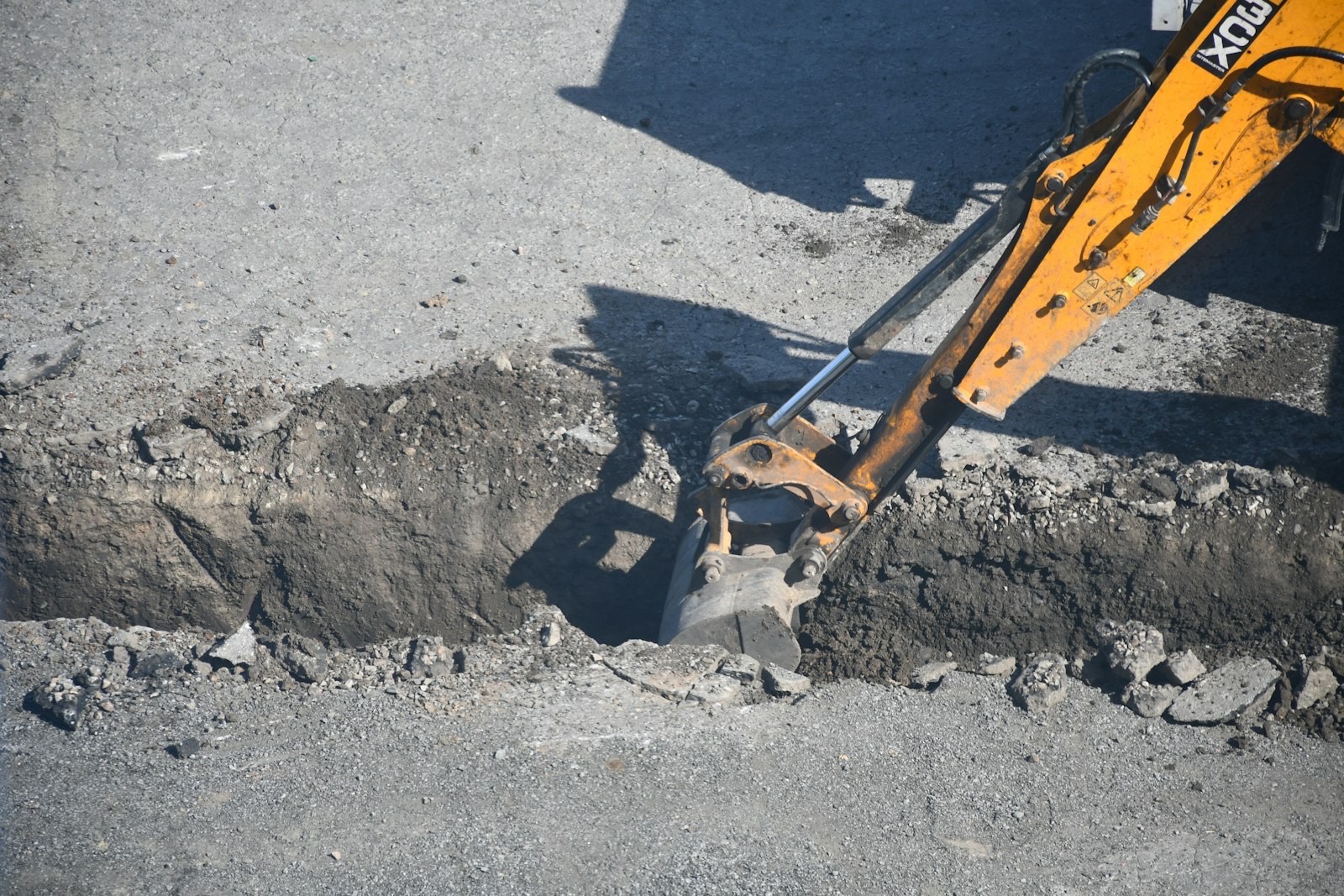
Underground Utility Surveys in London
We carry out underground utility surveys across London to PAS 128, locating and mapping the buried services beneath a site before anyone breaks ground. London hides some of the oldest and most congested utility networks in the country, and a single strike can injure people, stop a programme and run to serious cost, so knowing what is below first is one of the cheapest forms of risk management available.
Scan Surveys provides utility surveys across London and the wider UK, working to PAS 128, the British standard for underground utility detection, verification and location. PAS 128 gives the whole project team a common language for how a survey was done and how far its findings can be relied on, so a utility map becomes a stated level of confidence rather than just a drawing.
We combine detection techniques on site, because no single method finds everything, and deliver a clear, coded utility drawing you can design and dig against. Where the standard’s higher confidence levels are needed, we can take the survey through to physical verification.
Utility surveys in London: what is different
London’s streets carry generations of infrastructure laid on top of one another, from Victorian brick sewers and cast-iron mains to modern fibre. Services are densely packed and often shallow, records for older boroughs can be incomplete, and abandoned or unrecorded runs are common. That congestion is exactly why a careful detection survey pays for itself: the risk of striking something unexpected is higher here than almost anywhere.
Terraced and period streets frequently carry shared services, where a single supply feeds several properties by routes that are not obvious from the surface. Basement digs and lower-ground extensions, common across the boroughs, take excavation down alongside those services and close to neighbouring foundations, so accurate location before you dig protects both the works and the properties around them.
Working in the public highway in London means coordinating with the relevant highway authority, the London boroughs on local roads and Transport for London on the red-route network, and arranging appropriate traffic management. We plan the survey around those constraints so the work is carried out safely alongside live traffic and pedestrians.
- Dense, layered and often shallow services beneath central and inner-London streets
- Incomplete or outdated statutory records, especially for older boroughs
- Shared and unrecorded runs under terraced and period streets
- Basement and lower-ground excavations digging close to services and neighbours
- Surveys in the highway, planned around traffic management and access
What we deliver
We detect using electromagnetic location (EML) for metallic and conductive services and ground penetrating radar (GPR) for the non-metallic services EML cannot pick up, such as plastic pipes, ducts and fibre, adding signal tracing where a service can be traced. Using them together gives far more complete coverage than any one method alone.
Results are delivered as a coded utility drawing in CAD (DWG/DXF), classified against the PAS 128 quality levels, with a method statement setting out the equipment, technique, coverage and limitations. Where a high-risk service demands absolute certainty, we can verify to QL-A by trial hole or vacuum excavation.
A survey you can plan around.
A clear, repeatable method on every job, so you know what is happening on site and what lands on your desk afterwards.
Scope
We agree the PAS 128 quality level, the London site extent and any known risks, so the survey is specified to the confidence your works demand.
Records and reconnaissance
Where required we begin with a records search and a site walkover, correlating statutory plans against visible surface features.
Detect
We survey on site with EML and GPR, applying signal tracing where services can be traced, working around traffic and pedestrians as the location requires.
Deliver
We produce a coded CAD drawing with the PAS 128 classification and a method statement, and can progress to physical verification where needed.
Questions we are asked about working in London.
Do you cover the whole of London?
Yes. We carry out utility surveys right across London, from central and inner-London boroughs to Greater London, and UK-wide beyond that. Tell us the site and we will confirm attendance and the survey approach.
Why is a utility survey so important in London?
London streets carry unusually dense, old and layered services, and records for many areas are incomplete. That combination makes the risk of a service strike higher than usual, so locating and mapping what is below before you dig protects both people and the programme.
Can you survey a live or trafficked London street?
Yes. EML and GPR detection are non-intrusive, so surveys can be carried out on live and occupied sites with appropriate access and traffic management. We plan the work around the highway authority’s requirements and around live traffic and pedestrians.
What if the services are not on the records?
That is common in London, where abandoned and unrecorded runs are frequent. A PAS 128 detection survey locates services on site regardless of what the records show, which is exactly why detection is used rather than relying on statutory plans alone, and why critical services can be verified physically before you excavate.
Where to go next.
Utility surveys
The full service: EML and GPR detection and mapping of buried services to PAS 128 quality levels.
Read more LondonTopographical surveys in London
Tie the services to a measured survey of the site’s levels, features and boundaries for design.
Read more GuidePAS 128 quality levels explained
What QL-D to QL-A mean and which level of confidence your project actually needs.
Read moreSend us the brief. We will scope it.
Not sure whether you need a survey, a test or both? Ask. Tell us the site, the deadline and what you need to know, and we will confirm the right survey or test, the standard it meets and exactly what you will receive.
- 1Send the brief or call.
- 2Scope, method and price confirmed fast, free and with no obligation.
- 3Booked at short notice, surveyed, reported in days.