To locate post-tension cables before coring, scan the slab with ground penetrating radar, identify and mark the line of the tendons along with the reinforcement and services, then core only in the clear zones that avoid them. Cutting or drilling into a tensioned tendon is one of the most serious things that can happen on a coring job, so the tendons must be found and avoided before any penetration is made.
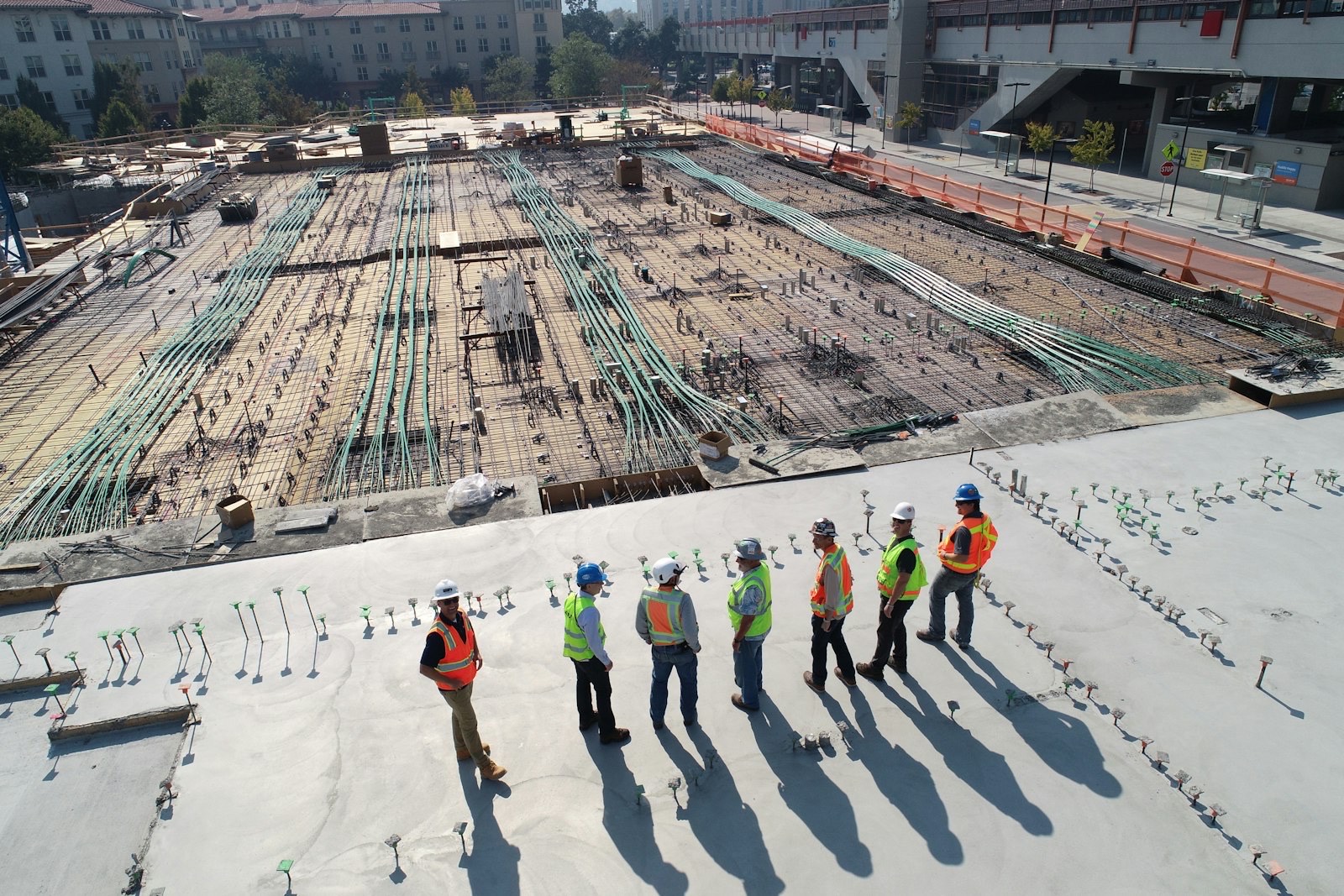
In a post-tensioned slab, high-tensile tendons run through the concrete under enormous load and follow a draped profile that is not obvious from the surface. This guide explains why that makes coring dangerous, how detection works, and the steps to take before you break into a post-tensioned element.
Why post-tension cables are so dangerous to hit
The tendons in a post-tensioned slab carry very high loads. Cutting or drilling into one can release that stored energy suddenly, damage the structural integrity of the slab and create a serious safety hazard. Repairing or re-stressing a severed tendon is difficult, costly and disruptive, and in the meantime the structure has been compromised.
That is a very different risk profile from striking ordinary reinforcement. It is why a post-tensioned slab is never cored on the strength of drawings alone, and why locating the tendons on site first is treated as essential rather than optional.
Particular care is needed near slab edges, where the tendons terminate in anchorage zones under very high local stress. Penetrations close to an edge or a known anchorage carry added risk, so those areas are scanned and treated with extra caution rather than assumed to be clear.
How post-tension detection works
Post-tension cable detection uses ground penetrating radar to locate the tendons before any work begins. The radar sends pulses into the slab and reads the reflections, and an experienced operator interprets that data to trace the tendon runs.
The key skill is distinguishing a draped post-tension tendon from conventional reinforcement. Tendons typically follow a curved, draped path through the depth of the slab, rising towards supports and dipping at mid-span, whereas reinforcement tends to run in a more regular, near-constant pattern. GPR shows where objects are, not what they are, so telling the two apart relies on reading the depth and profile of the reflections. This is why interpretation is central to reliable detection, and why it needs an operator who understands how post-tensioned slabs are built. The method is a specialist application of concrete scanning.
The steps to core safely
A safe approach to coring in a post-tensioned slab follows a clear sequence:
- Establish the slab type. Confirm the slab is, or may be, post-tensioned. Review any available drawings as a starting point, but treat them as unverified until proven on site.
- Scan around each proposed penetration. Run GPR across the area of each core, cut or drilled fixing, building a picture of the tendon profile, reinforcement and embedded services.
- Interpret and mark up. Distinguish tendons from reinforcement, mark their lines on the surface, and mark the reinforcement and services too.
- Identify the clear zones. Agree the safe zones where a penetration can be made without striking a tendon, and adjust core positions where needed.
- Record where required. For larger programmes, capture the tendon layout, depths and agreed clear points on annotated drawings so the information can be shared and reused.
Following that sequence turns a high-risk operation into a controlled one, with the tendons found and avoided before the core barrel ever touches the concrete.
Do drawings replace scanning?
No. Drawings are a useful starting point, but tendon positions on site can differ from the design, and drawings are often unavailable, incomplete or unverified in existing buildings. Even a good set of record drawings does not tell you exactly where the tendon sits at the point you want to core. Scanning confirms the actual layout before you commit to a penetration, which is why it is recommended even when drawings exist.
Common questions
How do you locate post-tension cables?
Post-tension cables are located with ground penetrating radar. The slab is scanned from one face, the reflections are interpreted to trace the draped tendon runs, and the tendon lines are marked on the surface along with the reinforcement and services, so that penetrations can be planned to avoid them.
Can GPR tell a post-tension cable apart from rebar?
GPR shows where objects are, and telling a draped post-tension tendon apart from conventional reinforcement relies on skilled interpretation of the depth and profile of the reflections. Tendons follow a curved, draped path through the slab depth, which an experienced operator can distinguish from the more regular pattern of reinforcement. This is why interpretation is central to reliable detection.
Can you scan a post-tensioned slab from one side?
Yes. GPR only needs access to one face of the slab, so a post-tensioned floor can be scanned from above or a soffit from below without access to both sides, and without the exclusion zones that X-ray methods require.
Do I still need to scan if I have the original drawings?
Yes. Tendon positions can differ from the design, and drawings are often incomplete or unverified in existing buildings. Scanning confirms the actual layout on site before you commit to a penetration, so it is recommended even when drawings are available.
If you are planning to core, cut or drill in a post-tensioned structure, our post-tension cable detection service locates and marks the tendons and identifies the safe zones on site, backed by concrete scanning for the full picture of reinforcement and services. For background on the radar method itself, see our guide on what a GPR survey is.